3-3.2.8 In-situ or Slide PCR
In-situ PCR or slide PCR has been used since the 1990s to perform PCR directly on small tissue samples, tissue micro arrays, or other small cell samples, rather than extracting DNA or RNA from the samples. In typical in-situ PCR protocol, first PCR master-mix directly applied onto the sample (mounted on a slide) and then mixture of sample and reagent are covered with a cover slip. The slide is then applied on a regular thermo cycler equipped with an in-situ adaptor or slide adaptor. Initially, as a result of the stoichiometry of nucleic acid components, the reaction becomes primer-driven. As the reaction proceeds, the generated PCR product becomes a target for further amplification and promotes further elongation. The sequences that have been elongated in multiple reactions are accumulated in the fixed cell, which serve as a target in the detection phase for the binding of radiolabeled probe. Another version of in situ PCR, known as reverse transcriptase in situ PCR (RT- in situ -PCR ) has even been used to detect RNAs and thus analyzing the expression of gene of interest.
3-3.2.9 M ultiplex PCR:
In multiplex PCR assay, more than one target sequence can be amplified by using multiple primer pairs in a single reaction mixture. Since multiple genes are the target in a single reaction, various information comes out from a single test run otherwise it would require several reactions. However, the primer sets must have annealing temperatures within a narrow range and are optimized to work properly within a single reaction.
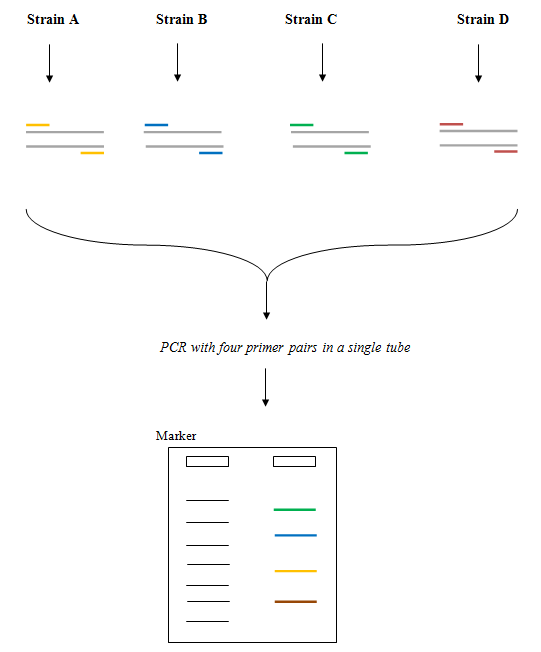
Fig3-3.2.9: Schematic Diagram of Multiplex PCR