In multiplex assays, false positive results are often obtained because each amplified fragment provides an internal control for the other amplified fragments. It is ideal for conserving costly polymerase and templates in short supply. Multiplex PCR can be utilized to determine the amount of a particular template in a sample by exponential amplification and internal standards. It is widely used in:
a ) Pathogen identification,
b) High throughput SNP genotyping,
c) Mutation analysis,
d) Gene deletion Analysis,
e) Template quantitation,
f) Linkage analysis,
g) RNA detection,
h) Forensic studies etc.
3-3.2.10 A ssembly PCR:
Assembly PCR, also known as Polymerase cycling assembly, is a method for the generation of large DNA oligonucleotides from shorter fragments. This process also requires DNA hybridization and annealing along with DNA polymerase to amplify a complete DNA sequence in a precise order based on the single stranded oligonucleotides used in the process. The reaction mixture contains oligonucleotides ~50 base pairs long each overlapping by about 20 base pairs. The reaction with all the reagents is then carried out for ~30 cycles and by an additional 23 cycles with the help of end primers. It thus facilitates construction of the synthetic genes and even entire synthetic genomes.
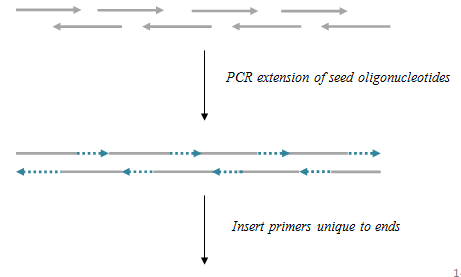
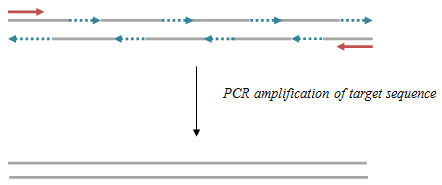
Fig3-3.2.10: Schematic Diagram of Assembly PCR