3-3.2.5 Nested PCR:
Nested PCR is a modified form of PCR designed to reduce the contamination in products occurs due to non-specific amplification or non-specific primer binding sites. Nested PCR makes use of two sets of amplification primers . The target DNA sequence for one set of primers (termed "inner" primers) is situated within the target sequence for the second set of primers (termed "outer" primers).In practice, "outer primers" are first used in a standard PCR procedure for a test sample. Then "inner primers" are used in a second PCR reaction where the product generated in the first PCR serves as the amplification target for the second PCR reaction. In this procedure, the sensitivity of the assay is increased to multiple fold as the product of the first reaction is re-amplified in the second reaction. The specificity of the assay is improved as the inner primers will only amplify if a specific product is obtained in the first PCR reaction.
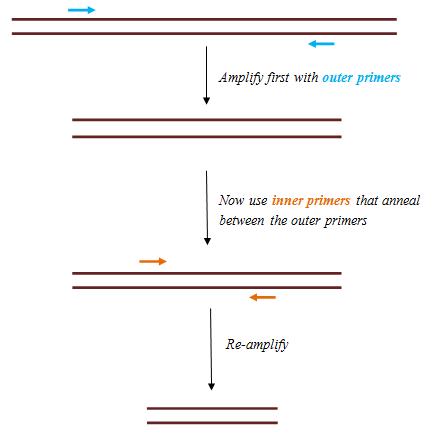
Fig 3-3.2.5 : Schematic Diagram of Nested PCR
3-3.2.6: Touchdown PCR
Touchdown (TD) PCR offers a simple and rapid means to optimize PCR specificity, sensitivity and yield, instead of lengthy optimizations and primer redesigning. TD-PCR uses an initial annealing temperature above the estimated melting temperature (Tm) of the primers in use, then progressively moves down to lower, more tolerant annealing temperature as the PCR cycle continues successively. Any difference in melting temperature between the correct and incorrect annealing will result in an exponential twofold advantage per cycle. TD-PCR has special application for amplification of templates that are usually difficult to amplify. It can also be used as a standard to enhance specificity and product formation. TD-PCR has widespread applicability in standard PCR protocols like reverse transcriptase PCR, in the construction of cDNA libraries and in the development of screens for detecting Single nucleotide polymorphisms.