3-3.2.4 Colony PCR:
In Colony PCR, bacterial colonies are directly used for PCR amplification and screening for example, screening for positive transformed DNA vector constructs. Colony samples are obtained with a sterile pipette tip or toothpick and transferred into a PCR mix. For cell disruption, the PCR is either run with an extended time at 95°C (when standard polymerase is used), or with a reduced denaturation step at 100°C (when special recombinant DNA polymerase is used).It is a widely used technique for rapid screening of transformed colonies to check the presence of insert, its orientation and the size. It is a simpler method as steps involving genomic or plasmid DNA isolation, restriction digestion and Southern blotting are not required at all. It can also be used for screening desired recombinant clones from DNA libraries, thus reducing the time and effort required for screening of large number of colonies.
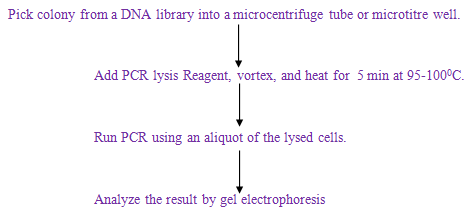
Fig3-3.2.4: Sequential Steps of Colony PCR