3-3.2.7 Inverse PCR:
The standard PCR suffers from the limitation that the 5' and 3' flanking regions of target DNA must be known. Inverse PCR methodology helps to overcome this drawback by making feasible amplification by a PCR reaction when only one internal sequence is known. It follows standard PCR program, but the primers are oriented in the reverse direction with respect to the normal orientation. A restriction fragment that self-ligates to form a circle serves as the template in this reaction. It involves:
• Restriction endonuclease mediated digestion of target DNA.
• Induction of self-ligation to form a circular product.
• It is then restriction digested with a known endonuclease to generate a cut within the known internal sequence.
• The resultant product with known terminal sequences can now be used for standard PCR.
Inverse PCR has many applications in molecular biology like the identification of genomic inserts and the amplification and identification of sequences flanking transposable elements.
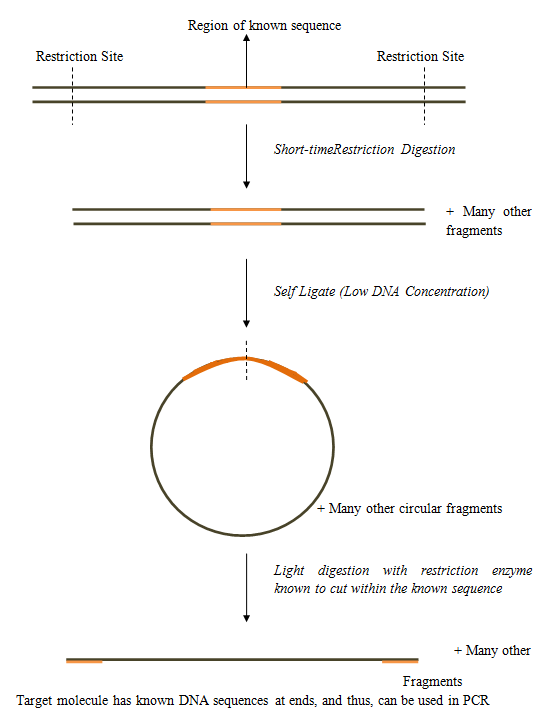
Fig 3-3.2.7: Schematic Diagram of Inverse PCR