3-5.6 Labeling of ssDNA, ssRNA and ds DNA with protruding 5' terminus or blunt ended or recessed 5' termini:
Oligonucleotides are usually end-labeled using polynucleotide kinase. The label is in the form of a 32P isotope at the γ-phosphate position of ATP. The polynucleotide kinase catalyzes an exchange reaction with the 5′-terminal phosphates at high concentration of dADP and low concentration of dATP. Alkaline phosphatase such as calf intestinal phosphatase (CIP) or shrimp alkaline phosphatase (SAP) can be used to remove 5' phosphate group and polynucleotide kinase (PNK) is used to add labeled phosphate using labeled dATP.
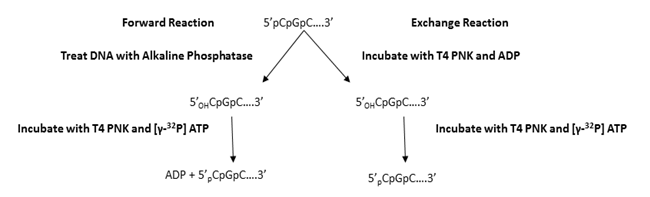
The same methodology is used for labeling double stranded DNA. Fragments which carry label at one end can only be generated using restriction enzyme which cleaves at internal sites, thus producing two fragments which can be separated by gel electrophoresis and purified. Fill-in end labeling is a popular approach to label large DNA fragments using Klenow subunit of E. coli DNA polymerase.
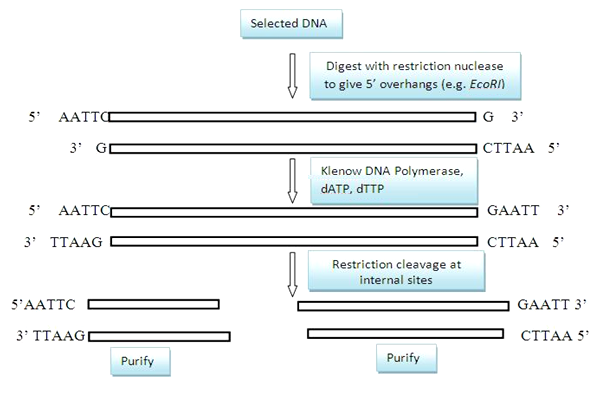
Fig3-5.6: Labeling of double-stranded DNA