3-5.1 Introduction
Probes are short section of DNA or RNA with an additional tagged or labeled chemical entity that are used to bind to its complimentary strand and thereby allows detection of candidate nucleic acid molecule. This chemically synthesized entity can be a fluorescent molecule or it can be an attachment to a colored bead, or quantum dots (Cd-Se Qdots, Zn-SQdots), photochromic compounds, isotopic labeling, non-isotopic labeling etc. It allows us to visualize when a probe attaches to DNA, RNA or other target nucleic acids.
3-5.2 Homoduplex and Heteroduplex between probe and target
For hybridization, the interacting single-stranded nucleic acid molecules should have a sufficiently high degree of base complementarity. It involves interaction of single strands of two sources of nucleic acids:
1. Probe consists of either chemically synthesizednucleic acids or modified oligonucleotides with known sequence that helps to identify similar or identical complementary sequences.
2. Target consists of template nucleic acid molecules with which probes will hybridize and form complex and heterogeneous mixture.
Probe or target can be in double-stranded form which must be separated before hybridization by heating or by alkaline treatment. Complementary base pairs are allowed to re-associate when single stranded probe is mixed with single stranded target. Various types of re-association can occur at this stage. Complementary probes and complementary targets can hybridize to each other forming homoduplexes. Both Homo and hetero-duplexes are useful for hybridization assay to detect a particular sequence in target.
The whole methodology revolves around the principle of hybridizing probe with a known sequence to a target which may not have related sequences to anneal with. Conditions of hybridization must be stringent enough to eliminate mismatched heteroduplexes. Low concentration of salts and high temperature increases the stringent conditions. If the probe used is small enough then hybridization reactions can be chosen such that heteroduplex is unstable even when there is single mismatch.
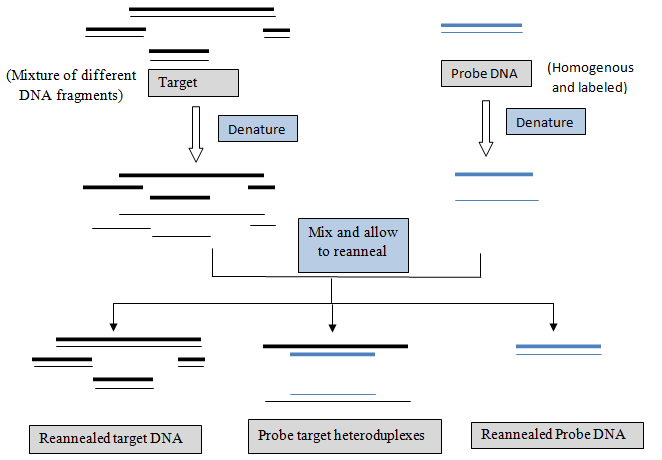
Fig 3-5.2: Method of Nucleic acid hybridization
Probe and target are first denatured and annealed forming the probe-probe homoduplexes and target-target homoduplexes, but the desired reaction is probe-target heteroduplex formation.