3-5.5.1.1 DNA Nick translation:
It involves insertion of random single-strand breaks called nicks in one of the strands of double stranded target DNA which exposes 3′- OH termini and 5′-PO4 termini.The nicks are introduced by endonuclease like pancreatic deoxyribonuclease I (DNase I).
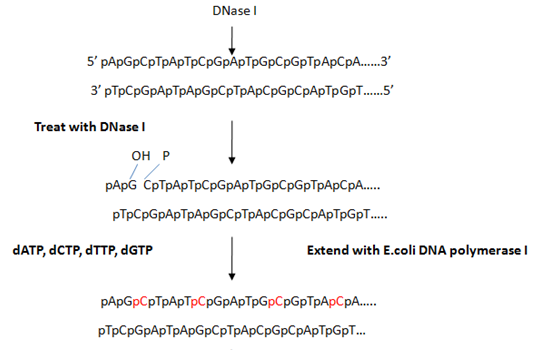
Fig. 3-5.5.1.1: DNA Nick translation by DNase I
Addition of DNase I and multi-subunit enzyme E. coli DNA polymerase I is used for nick translation which contributes both activities like:
(i) 5′ → 3′ exonuclease that attacks the exposed 5′ termini of a nick and sequentially removes the nucleotides in 5′ → 3′ direction;
(ii) DNA polymerase adds nucleotides to the free 3′-OH group, in 5′ → 3′ direction replacing the nucleotides removed by exonuclease and causing lateral displacement (translation) of the nick.
This method requires 100-fold less radioactive precursor than in-vivo labeling method. The amount of radiolabel incorporated depends on number of nicks created by DNase I. Too much or too little nicking must be avoided. At low temperatures (about 15°C), the disadvantage is that only one complete regeneration of existing nucleotide sequence takes place and reaction does not proceed further.