4.4 Structural Testing with Stuck-at Fault Model
We will illustrate structural testing of stuck-at faults of the circuit in Figure 2.
First let us consider s-a-0 in net I1, as shown in Figure 8. As the net I1 is stuck-at-0, we need to drive it to 1 to verify the presence/absence of the fault. To test if a net is stuck-at-0(stuck-at-1), obviously it is to be driven to opposite logic value of 1 (0). Now all other inputs (I2 through I5) of G1 are made 1, which propagates the effect of fault to OG1; if fault is present then OG1 is 0, else 1.To propagate the effect of fault to O, in a similar way, all inputs of G2 though G5 are made 1. Now, if fault is present, then O is 0, else 1. So, I1=1, I2=1,….,I25=1, is a test pattern for the stuck-at-0 fault at net I1.
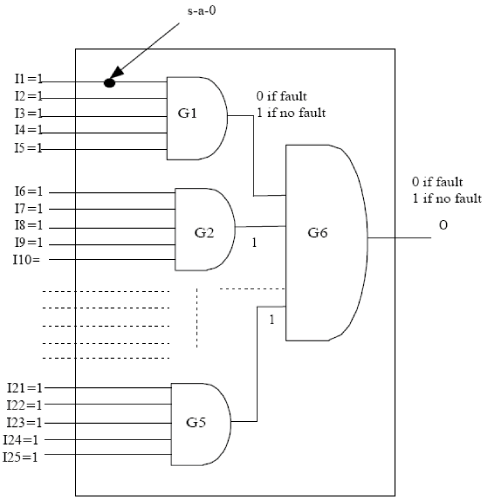
Figure 8. s-a-0 fault in net I1 with input test pattern
Now let us consider s-a-1 in an internal net (output of G1), as shown in Figure 10. As the net output of G1 is stuck-at-1, we need to drive it to 0 to verify the presence/absence of the fault. So at least on input of G1 is to be made 0; at G1, I1=0 and I2 through I5 are 1. To propagate the effect of fault to O, all inputs of G2 though G5 are made 1. Now, if fault is present, then O is 1, else 0. So, I1=0, I2=1,….,I25=1, is a test pattern for the stuck-at-1 fault at net output of G1. It is interesting to note that same test pattern I1=0, I2=1,….,I25=1 tests both s-a-1 at net I1 and output of G1. In other words, in structural testing with stuck-at fault model, one test pattern can test more than one fault.
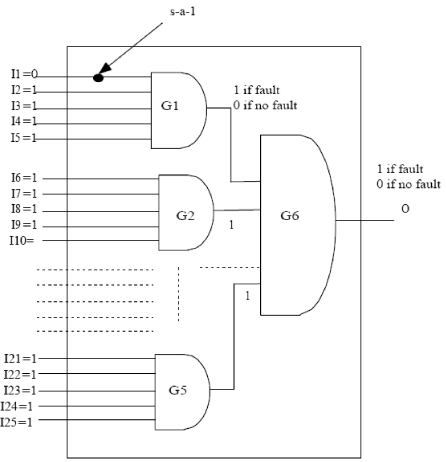
Figure 9. s-a-1 fault in net I1 with input test pattern