5-5.4.10. Expression of toxic proteins
Foreign proteins observed to be toxic in the cytosol are non-toxic when accumulated within transgenic chloroplasts as they are compartmentalized inside chloroplast.
5-5.5. Comparison of chloroplast and nuclear genetic engineering
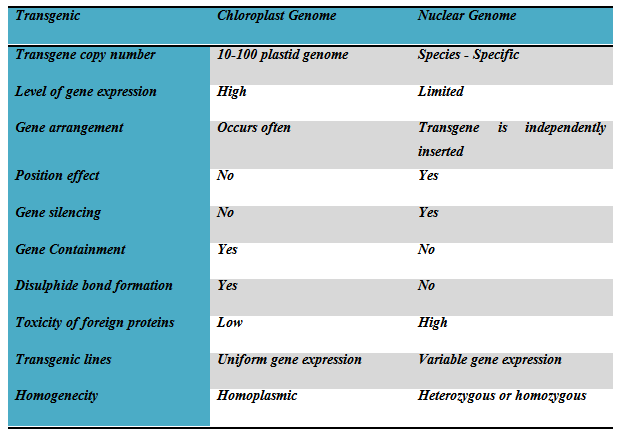
Table 5-5.5: Differences between chloroplast and nuclear genetic engineering
5-5.6. Transformation methods for chloroplast transformation
- Biolistic/Particle bombardment method involves the introduction of Escherichia coli plasmids containing a gene of interest and marker gene into chloroplasts or plastids. The insertion of foreign genes into plasmid DNA occurs by homologous recombination via the sequences flanking at the insertion site. First successful chloroplast transformation was performed in Chlamydomonas reinhardtii by particle bombardment method. Simple operation and high transformation efficiency makes it a favorable way for plastid or chloroplast transformation.
- PEG-mediated and Agrobacterium- mediated transformation method was also employed in the early days.
After the first chloroplast transformation in Chlamydomonas reinhardttii, the stable plastid transformation has also been established in higher plants, Nicotiana tobacum, Arabidopsis, rape, Lesquerella, rice, potato, lettuce, soybean, cotton, carrot and tomato.
However, plastid transformation is routinely performed only in tobacco because of higher efficiency of transformation in tobacco than in other plants.