Vane Pumps
In the previous lecture we have studied the gear pumps. These pumps have a disadvantage of small leakage due to gap between gear teeth and the pump housing. This limitation is overcome in vane pumps. The leakage is reduced by using spring or hydraulically loaded vanes placed in the slots of driven rotor. Capacity and pressure ratings of a vane pump are generally lower than the gear pumps, but reduced leakage gives an improved volumetric efficiency of around 95%.
Vane pumps are available in a number of vane configurations including sliding vane, flexible vane, swinging vane, rolling vane, and external vane etc. Each type of vane pump has its own advantages. For example, external vane pumps can handle large solids. Flexible vane pumps can handle only the small solids but create good vacuum. Sliding vane pumps can run dry for short periods of time and can handle small amounts of vapor. The vane pumps are known for their dry priming, ease of maintenance, and good suction characteristics. The operating range of these pumps varies from -32°C to 260°C.
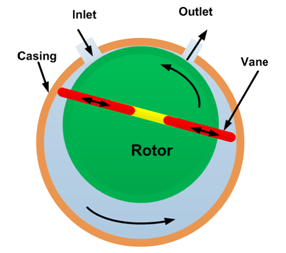
Figure 5.3.1 Schematic of working principle of vane pump
The schematic of vane pump working principle is shown in figure 5.3.1. Vane pumps generate a pumping action by tracking of vanes along the casing wall. The vane pumps generally consist of a rotor, vanes, ring and a port plate with inlet and outlet ports. The rotor in a vane pump is connected to the prime mover through a shaft. The vanes are located on the slotted rotor. The rotor is eccentrically placed inside a cam ring as shown in the figure. The rotor is sealed into the cam by two side plates. When the prime mover rotates the rotor, the vanes are thrown outward due to centrifugal force. The vanes track along the ring. It provides a tight hydraulic seal to the fluid which is more at the higher rotation speed due to higher centrifugal force. This produces a suction cavity in the ring as the rotor rotates. It creates vacuum at the inlet and therefore, the fluid is pushed into the pump through the inlet. The fluid is carried around to the outlet by the vanes whose retraction causes the fluid to be expelled. The capacity of the pump depends upon the eccentricity, expansion of vanes, width of vanes and speed of the rotor. It can be noted that the fluid flow will not occur when the eccentricity is zero. These pumps can handle thin liquids (low viscosity) at relatively higher pressure. These pumps can be run dry for a small duration without any failure. These pumps develop good vacuum due to negligible leakage. However, these pumps are not suitable for high speed applications and for the high viscosity fluids or fluids carrying some abrasive particles. The maintenance cost is also higher due to many moving parts. These pumps have various applications for the pumping of following fluids:
- Aerosol and Propellants
- Aviation Service - Fuel Transfer, Deicing
- Auto Industry - Fuels, Lubes, Refrigeration Coolants
- Bulk Transfer of LPG and NH3
- LPG Cylinder Filling
- Alcohols
- Refrigeration - Freons, Ammonia
- Solvents
- Aqueous solutions