Superposition of polarized waves
Two electromagnetic waves can be superposed through vector addition of their electric field vectors. The properties of the resultant waves depend on the wavelength, polarization, and the phase of the superposing waves. In-phase superposition of two waves of same wavelength that are linearly polarized in two perpendicular planes results in a linearly polarized light with its electric field vector oscillating in a plane that is inclined at an angle of 45° to the polarization planes of both the waves (Figure 8.2).
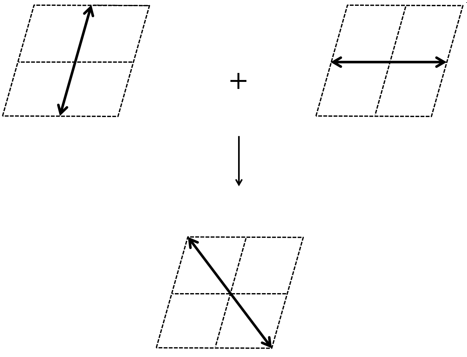
Figure 8.2 Superposition of linearly polarized waves |