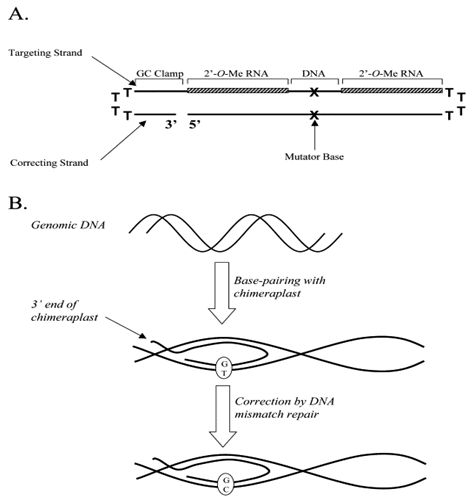
Figure 8-1.7.2.8: Structure and mechanism of action of RNA DNA chimera
(Source: http://www.sciencedirect.com/science/article/pii/S0925443902000686)
• Receptor-Mediated Endocytosis
It can be both viral and non-viral mediated gene transfer. Viral vectors attach to the surface receptors through viral surface components and internalized. In non viral mode of receptor mediated endocytosis DNA is first coupled to a ligand that binds specifically to a cell surface receptor and causes transfer of the DNA into cells by endocytosis. Coupling is done by linking the receptor molecule with polylysine followed by reversible binding of the negatively charged DNA to the positively charged polylysine component. Transferrin receptor which is comparatively abundant in proliferating cells and hematopoietic cells is utilized as a target and transferin as a ligand in this approach.
Advantage: Gene transfer efficiency may be high.
Disadvantage:
- It does not allow integration of the transferred genes. Also, the protein— DNA complexes are not stable in serum.
Coupling of inactivated adenovirus to the DNA-transferin complex can increase gene transfer efficiency which help in receptor mediated endocytosis and lysosomal escape.