3-4.6 Dot Blot and Slot Blot Hybridization
These two techniques represents the simplification of Southern and Western blots saving the time involved in procedures of chromatography, electrophoresis, restriction digestion and blotting of DNA or proteins from the gel to membrane. Here nucleic acid mixture is directly applied (blotted) on to the nylon or nitrocellulose membrane where hybridization between probe and target takes place, denatured to single-stranded form and baked at 80°C to bind DNA target to membrane. In dot-blot, target is blotted as circular blots whereas in slot-blots, it is in the form of rectangular blots. Due to this, slot-blot offers greater precision in observing different hybridization signals. After blotting, membrane is allowed to dry and non-specific sites are blocked by soaking in blocking buffer containing BSA. It is then followed by hybridization of labeled probe for detection of specific sequences or gene.
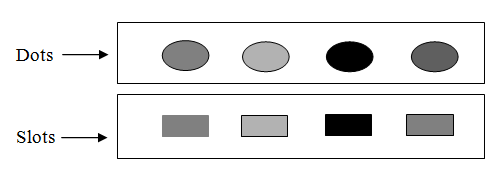
Fig 3-4.6: Dots and slots in dot and slot blot hybridization
These procedures can only detect presence and absence of particular sequence or gene. It cannot distinguish between two molecules of different sizes as they appear as single dot on membrane. It also has application in detecting alleles that differ in single nucleotide with the help of allele-specific oligonucleotides.
Bibliography
H. Lodish, A.Berk, P. Matsidaira, Chris A. Kaiser(2004); Modern Cell Biology, 5th edition; Macmillan Higher Education.
Sandy B. Primrose & Robert W. Old (2001); Principle of Gene Manipulation, 6th edition; Blackwell Scientific Publ.
T.A.Brown ( 2002 ); Genomes, second edition; Oxford: Wiley-Liss press .