3. Membrane bound receptors: Membrane bound receptors are proteins that are associated with the cell membrane . They can span across the membrane and can transmit a signal from outside the cell to inside the cell. Outside the cell, a ligand (e.g. Hormone) will bind to the receptor . A few chemical stimuli, including steroid hormones and the gas nitric oxide cross the plasma membrane and bind receptors inside the cell. Thus the receptor undergoes a conformational change. This change in the shape of the receptor is detected inside the cell. It is the shape change that is the transmission of the signal from the outside to the inside. Inside the cell, other proteins can interact with the receptor in its new shape and be turned 'on' to continue the signal pathway .
Selective expression of certain receptors and their associated cytoplasmic transduction machinery allows differentiated cells to respond specifically to particular ligands. Members of each family of receptors share one or more structurally homologous domains. In some families, the members share both ligand binding and signal transducing strategies (seven helix receptors, G-protein coupled receptors, cytokine receptors). Members of other families share either a similar ligand-binding structure (Tumour Necrosis Factor receptor family) or a common signal transducing method (receptor tyrosin kinases).
Membrane receptors are found also in the cis Golgi network which captures the proteins during protein sorting and carries them in transport vesicles back to the ER. Also most cholesterol is transported in the blood bound to protein in the form of particles known as low density lipoproteins or LDL. When a cell needs cholesterol for membrane synthesis, it makes transmembrane receptor for LDL and inserts them into its plasma membrane. Once in the plasma membrane, the LDL receptors diffuse until they associate with clathrin-coated pits as shown in Figure 5.
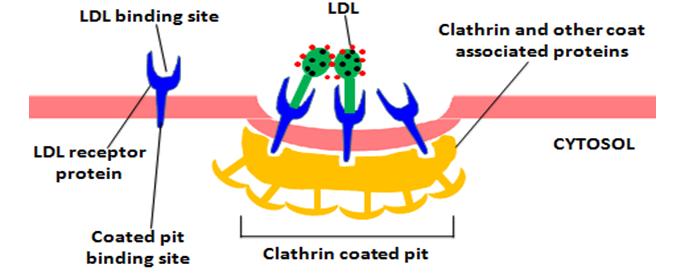
Figure 5: LDL receptor proteins binding to a coated pit in the plasma membrane of a cell