Mechanism of action: The intracellular nuclear receptors respond to small hydrophobic signaling molecules that diffuse readily across the plasma membrane. These molecules bind to the receptors and a conformational change takes place in the receptor. This is followed by a series of intracellular signal transduction cascade. The steroid hormones like thyroid hormone, vitamin D3 and retinoic acid differ greatly from one another in both chemical structure and function. Once inside the cell, these signaling molecules bind to intracellular receptors that are expressed by the hormonally responsive target cells. These receptors are transcription factors that contain domains for ligand binding, DNA binding and transcriptional activation. Ligand binding regulates their function as activators or repressors of their target genes. So the steroid hormones and related molecules directly regulate gene expression. In response, these receptors work with other proteins to regulate the expression of specific genes , thereby controlling the development , homeostasis , and metabolism of the organism.
The nuclear receptor is kept in the cytoplasm by interaction between its ligand-binding domain (LBD) and inhibitor proteins in the absence of a steroid hormone. When hormone is present, it diffuses readily through the plasma membrane and binds to the ligand-binding domain. This causes a conformational change thus releasing the receptor from the inhibitor proteins. The receptor with bound ligand is then translocated into the nucleus, where its DNA-binding domain (DBD) binds to response elements, allowing the ligand-binding domain and an additional activation domain (AD) at the N-terminus to stimulate transcription of target genes as shown in Figure 4.
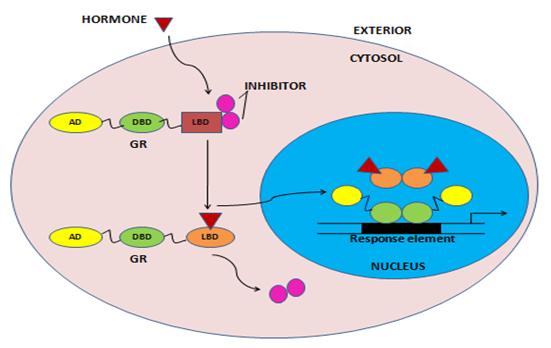
Figure 4: Model of hormone-dependent gene activation by a homodimeric nuclear receptor.