Receptor types based on cellular location:
There are mainly three types of receptors present in the cell based on their location in the cell. They are:
- Cytosolic receptors
- Nuclear receptors
- Membrane bound receptors
1. Cytosolic receptors: Cytosolic receptors are specialized integral membrane proteins that take part in communication between the cell and the outside world. Extracellular signalling molecules (usually hormones , neurotransmitters , cytokines , growth factors or cell recognition molecules ) attach to the receptor , triggering changes in the function of the cell . In this way the receptors play a unique and important role in cellular communications and signal transduction. Most steroid hormones have receptors within the cytoplasm which acts by stimulating the binding of their receptors to the promoter region of steroid-responsive genes. Examples of cytosolic receptors are Estrogen receptors, Glucocorticoid receptors etc.
Mechanism of action of cytosolic receptors: Estrogen diffuses across the plasma membrane and binds to its receptor in the nucleus. The estrogen receptor is bound to Hsp 90 chaperones in the absence of the estrogen hormone as shown in Figure 2. The binding of the estrogen induces a conformational change in the receptor, displacing Hsp 90 and then leading to the formation of receptor dimers which binds to DNA, associate with coactivators with histone acetyltransferase (HAT) activity, and stimulate transcription of their target genes. In other cases, the receptor binds the DNA either in the presence or absence of hormone. But hormone binding alters the activity of the receptor as a transcriptional regulatory molecule. For example, in the absence of hormone, thyroid hormone receptor is associated with a corepressor complex and represses transcription of its target genes. Hormone binding induces a conformational change that results in the interaction of the receptor with co activators rather than co repressors, leading to transcriptional activation of thyroid hormone-inducible genes.
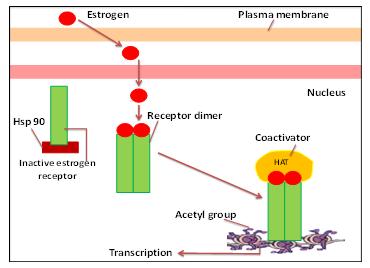
Figure 2: Estrogen receptor action