Functions of Gibberellin: Gibberellins are involved in stem elongation. Many seedlings (eg. radish, lettuce, tomatoes etc.) when grown in petri dishes containing GA3 solution, show elongation of hypocotyl. GA1 also causes hyperelongation of stems by stimulating both cell division and cell elongation. GAs cause stem elongation in response to long days GAs can cause seed germination in some seeds that normally require cold (stratification) or light to induce germination as shown in Figure 7. Barley is one such example. Gibberellins are known to stimulate the de-novo synthesis of numerous hydrolases, notably α-amylase in the aleurone cells that surround the starchy endosperm in barley. In seed germination in lettuce, the main signal stimulating gene expression of amylase and other germination-initiating enzymes is light. Thus the photoactivation is achieved by phytochrome in its Pfr form. GA stimulates the production of numerous enzymes, notably a-amylase, in germinating cereal grains.
3. Cytokinin:
Cytokinins are a class of phytohormones with a structure resembling adenine which promote cell division and have other similar functions to kinetin. This hormone is termed as "cytokinin" because they stimulate cell division (cytokinesis). Cytokinins promote cell division or cytokinesis, in plant roots and shoots. They are involved primarily in cell growth and differentiation, but also affect axillary bud growth, apical dominance and leaf senescence. Kinetin was the first cytokinin to be discovered and it is so named because of the compounds’ ability to promote cytokinesis (cell division). Though it is a natural compound, it is not made in plants and therefore it is usually considered a "synthetic" cytokinin. The most common form of naturally occurring cytokinin in plants today is called zeatin which was isolated from corn (Zea mays). Cambium and other actively dividing tissues also synthesize cytokinins. Approximately 40 different structures of cytokinin are known. Other naturally occurring cytokinins include dihydrozeatin (DHZ) and isopentenyladenosine (IPA). Cytokinin concentrations are highest in meristematic regions and areas of continuous growth potential such as roots, young leaves, developing fruits, and seeds. Cytokinins have been found in almost all higher plants as well as mosses, fungi, bacteria and also in tRNA of many prokaryotic and eukaryotic organisms. Today there are more than 200 natural and synthetic cytokinins combined.
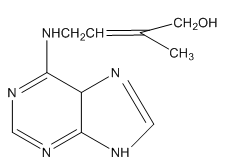
Figure 6: Cytokinin