5. Ethylene:
Ethylene (IUPAC name: ethene), unlike the rest of the plant hormone compounds is a gaseous hormone. Of all the known plant growth substance, ethylene has the simplest structure. It contains a carbon-carbon double bond, ethylene is classified as an unsaturated hydrocarbon. It is produced in all higher plants and is usually associated with fruit ripening. Ethylene which is also known as the 'death hormone' or 'ripening hormone' plays a regulatory role in many processes of plant growth, development and eventually death. Fruits and vegetables contain receptors which serve as bonding sites to absorb free atmospheric ethylene molecules. The overall effect is to hasten ripening, aging and eventually spoilage.
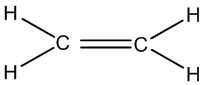
Figure 10: Ethylene
Biosynthesis of ethylene:
Methionine is the precursor of ethylene, and 1- aminocyclopropane-1-carboxylic acid serves as an intermediate in the conversion of methionine to ethylene. Ethylene is produced by almost all parts of higher plants but the rate of production of ethylene depends on the type of tissue and the stage of development. Meristematic regions and the nodal regions of plants are the most active in ethylene biosynthesis. Ethylene production increases during fruit ripening, leaf abscission and flower senescence. Any type of wounding and physiological stresses such as flooding, chilling, disease, and temperature or drought stress can induce ethylene biosynthesis.