↑ Auxin ↓Cytokinin = Root Development
↑ Cytokinin ↓Auxin = Shoot Development
Auxin = Cytokinin = Callus Development
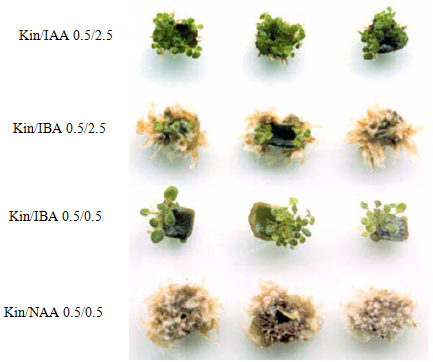
Figure 11: Effect of different auxin and cytokinin concentration on tissue development
(Kin– Kinetin; IAA– Indole acetic acid; IBA-Indole-3-butyric acid; NAA- Naphthaleneacetic acid)
Cytokinins are derived from adenine and produce two immediate effects on undifferentiated cells: the stimulation of DNA synthesis and increased cell division in tissue culture. Cytokinins also produce a delayed response in undifferentiated tissue which is the formation of shoot primordia. Although low tissue concentrations of cytokinins (e.g., 1 × 10⁻⁸ M zeatin) have clear effects during tissue culture, higher concentrations are found in actively dividing tissues such as those of plant embryos and developing fruits. Auxins are indole or indole-like compounds that stimulate cell expansion, particularly cell elongation in tissue culture. Auxins also promote ad ventitious root development. Only small amounts of auxin (1 × 10⁻⁶ M) are required to demonstrate an IAA response and even smaller amounts of synthetic auxin (e.g., NAA) are required for a tissue response during tissue culture. Synthetic auxins are more effective hormones that last for an extended length of time. Furthermore, light influences the physiological activity of IAA while synthetic auxins are not as light sensitive.