We have studied animal hormones in previous lectures. Plants also have analogous signaling molecules, called phytohormones. These are a group of naturally occurring, organic substances which influence the physiological processes at low concentrations. Plant hormones are physiological intercellular messengers which are needed to control the complete plant lifecycle, including growth, germination, rooting, fruit ripening, flowering, foliage and death. They are secreted in response to environmental factors such as light, temperature, abundance of nutrients, drought conditions, chemical or physical stress. Levels of hormones change over the lifespan of a plant and they are also dependent upon environment and seasons.
Every aspect of plant growth and development is under hormonal control to some degree. A single hormone can regulate a diverse array of cellular and developmental processes, while at the same time multiple hormones often influence a single process. Right combination of hormones is vital to achieve the desired behavioral characteristics of cells and the productive development of plants as a whole. The application of growth factors allows synchronization of plant development to occur. For example, ripening bananas can be regulated by using desired atmospheric ethylene levels. Other applications include rooting of seedlings or the suppression of rooting with the simultaneous promotion of cell division as required by plant biotechnologists.
Five major classes of plant hormones are known in plants. With progressing research, more active molecules are being found and new families of regulators are emerging, one example being polyamines such as putrescine or spermidine.
- Auxin
- Gibberellin
- Cytokinin
- Abscisic acid
- Ethylene
- Auxin:
1. Auxin:
The term auxin is derived from the Greek word ‘auxein’ which means to grow. They are a class of plant hormones which has a cardinal role in coordination of many growth and behavioral processes in the plant's life cycle essential for development of plant. Auxin is the first plant hormone to be identified. They have the ability to induce cell elongation in stems and resemble indoleacetic acid (the first auxin to be isolated) in physiological activity.
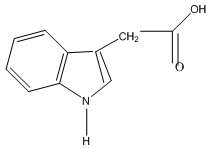
Figure 1: Auxin
Indole-3-acetic acid (IAA) is the main auxin in most plants. IAA is transported is cell to cell.