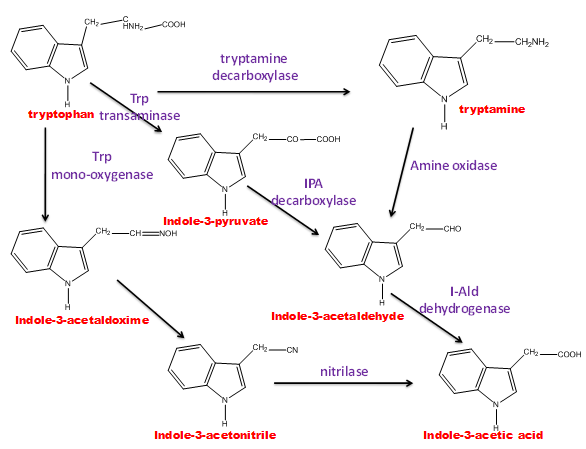
Figure 3: Biosynthesis of auxin from Tryptophan
Classification of auxins: Auxins are classified into two types based on its occurrence, if they occur naturally or are synthesized artificially.
a. Natural auxins
b. Synthetic auxins
a. Natural auxins: The four naturally occurring (endogenous) auxins are Indole-3-acetic acid, 4-chloroindole-3-acetic acid, phenylacetic acid and indole-3-butyric acid; only these four are synthesized by plants.
b. Synthetic auxins: Synthetic auxin analogs include 1-naphthaleneacetic acid, 2,4-dichlorophenoxyacetic acid (2,4-D) and many others. Some synthetic auxins, such as 2,4-D and 2,4,5-trichlorophenoxyacetic acid (2,4,5-T), are used also as herbicides. Broad-leaf plants (dicots), such as dandelions, are much more susceptible to auxins than narrow-leaf plants (monocots) such as grasses and cereal crops, so these synthetic auxins are useful as synthetic herbicides.