Transcytosis:
The process of transfer of internalized receptor across the cell to opposite domain of the plasma membrane is called transcytosis. It occurs in polarized cells or epithelial cells mostly. It is used for protein sorting and also a mean for transport of macromolecules across the epithelial cell sheets.
Example: Transport of Abs from blood to other secreted fluids. The Abs bind to the receptor on basolateral surface and then transcytosed along with their receptors to apical surface. The receptors are then cleaved and release Abs into extracellular secretions.
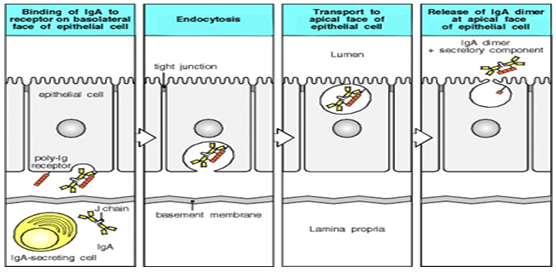
Figure 12: Process of transcytosis of IgA, an immunoglobulin, within an epithelial cell.
Exocytosis:
The process by which the cells direct the contents of secretory vesicles out of the cell membrane is known as exocytosis. These vesicles contain soluble proteins to be secreted to the extracellular environment, as well as membrane proteins and lipids that are sent to become components of the cell membrane. It is the final step in the secretory pathway that typically begins in the endoplasmic reticulum (ER), passes through the Golgi apparatus, and ends at the outside of the cell. Some of the examples include secretion of proteins like enzymes, peptide hormones and antibodies from cells and release of neurotransmitter from presynaptic neurons.