3. Caveolae:
Caveolae is a pathway which is independent of clathrin- endocytosis process and involves in the uptake of molecules in small invaginations of the plasma membrane (50 to 80 mm diameter). These are enriched in lipid rafts of cholesterol, phospholipid and sphingolipids and possess a distinct coat formed by a protein called caveolin (cholesterol binding protein). It is abundant in smooth muscle, type I pneumocytes, fibroblasts, adipocytes, and endothelial cells (Parkar et al., 2009).
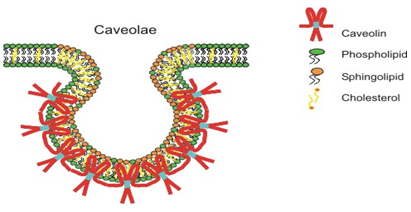
Figure 8: Structure of caveolae
Cells mostly use caveolae for the selective uptake of molecules as small as folate to full size proteins such as albumin and alkaline phosphatase. Many studies have shown that caveolae-mediated uptake of materials is not limited to macromolecules. In certain cell-types, viruses as simian virus 40 and even entire bacteria as some specific strains of E. Coli are engulfed and transferred to intracellular compartments in a caveolae-dependant fashion.
4. Macropinocytosis: The process of uptake of fluids in large vesicles (0.15 to 5 µm in diameter) is called macropinocytosis.
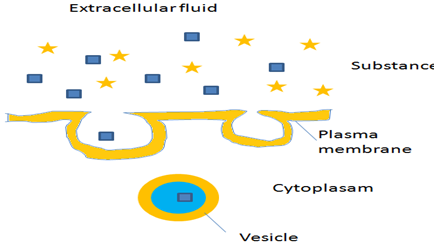
Figure 9: Diagram depicting Pinocytosis