Phases for receptor mediated endocytosis for cholesterol uptake involves:
- Receptor Binding & its activation: Here LDL receptor binds to Apo-B protein on the LDL particle
- Coated Pit Formation: Clathrin forms cage around forming endosome
- Clathrin-Coated Vesicle Budding
- Uncoating of the Vesicle
- Early Endosome associates with other vesicles
- Formation of CURL (Compartment for Uncoupling of Ligand and Receptor) or Late Endosome
- Recycling of the Receptor to the cell surface
- Fusion of Transport Vesicle with Lysosome
- Digestion of the LDL to Release Cholesterol
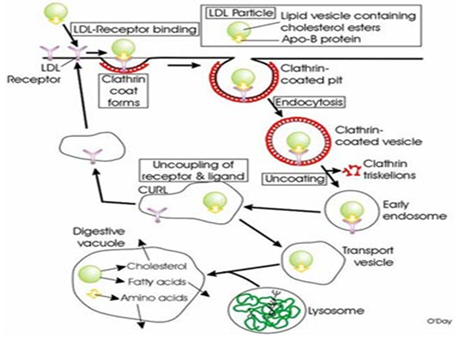
Figure 6: Receptor mediated endocytosis: Cholestrol uptake
In patients suffering from familial hypercholesterolemia, having high levels of cholesterol in serum and hence suffer from heart attacks early in life. Because these patients are unable to internalize LDL from the extracellular fluids, result in high accumulation of cholesterol. Normal individual possess LDL for transport of cholesterol but familial hypercholesterolemia results from inherited mutation in LDL receptor. These mutations can happen in two ways.
Either the patients simply fail to bind with LDL, demonstrating that a specific cell surface receptor is required for uptake of cholesterol. Or the patients are able to bind with LDL but are unable to internalize it. Because they are unable to concentrate in coated pits, demonstrating that coated pits in receptor plays an important role for cholesterol uptake. This mutation lies in the cytoplasmic tail of the receptor and can be subtle as the change of a single tyrosine to cysteine.
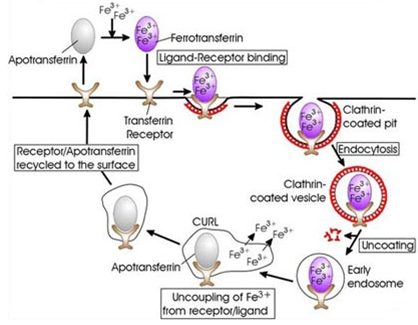
Figure 7: Example for receptor mediated endocytosis for ion uptake