A contemporary area of interest and research today in the cultural approach to television is the hybridity of images. As Chris Barker remarks:
“Today cultural studies has a concern with the globalization of television and its role in the creation of a global electronic culture whereby cultural artefacts and meanings from different historical periods and geographical places can mix together and be juxtaposed to constitute a jumbled-up flow of images and ideas.”
Therefore in television we find a complex semiotic environment and competing signs and meanings with the following features:
• A distributed network of meaning
• Cultural mixing or hybridity
• Cultural imperialism
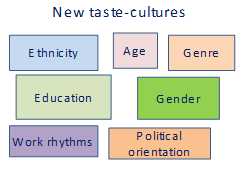
Further, we have new taste-cultures grouped according to ethnicity, age, genre, etc:
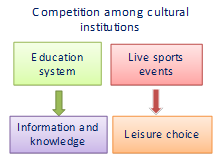
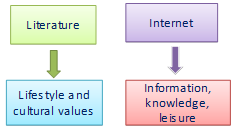
Finally, television is in competition with other cultural institutions. The internet is now the largest source of information and entertainment and poses a formidable challenge to television in this regard.