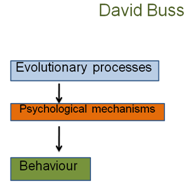
This lecture is devoted to a relatively new approach to culture called evolutionary psychology. A well known figure in this domain is David Buss who tells us that our behavior is the result of certain evolutionary processes. Evolutionary processes give rise to psychological mechanisms and these psychological mechanisms in turn give rise to our behavior.
One may ask how this is important in a study of culture and of human behavior and discourses, and the cultural and social arrangements that we have. The answer is that our cultural arrangements are obviously intimately related to our behavior patterns. The most important point is that the interrelationship can ultimately be traced to the evolutionary processes, i.e., to our evolutionary lineage.
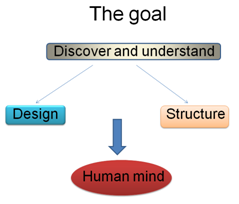
What then is the goal of evolutionary psychology? The goal of evolutionary psychology is to discover and understand two things and these things are related to the human mind. It is seeks to discover and understand the design of the human mind, and the claim here is that the human mind is designed through evolutionary processes. Along with this is a related question: what is the structure of the human mind that eventually gives rise to culture and cultural processes?