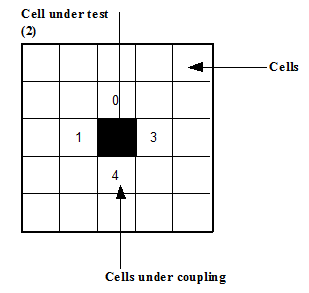
Figure 9. Numbering of cells in type-1 neighborhood
• Type-2 neighborhood
A type-2 neighborhood has eight neighborhood cells corresponding to the cell under test. Type-2 neighborhood results in more complex fault model than a type-1 neighborhood. Figure 10 shows a type-2 neighborhood and the numbering of cells in type-2 neighborhood is shown in Figure 11.
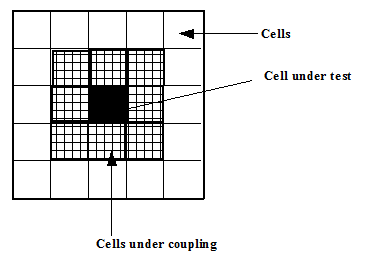
Figure 10. Type-2 neighborhood
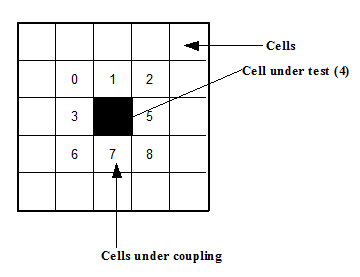
Figure 11. Numbering of cells in type-2 neighborhood
There are two types of NPSFs which are mainly used in fault modeling of memories.
• Active NPSF (ANPSF)
The value in the cell under test changes due to a change in ONE cell of the neighborhood (type-1 or type-2 depending on the one being used); all other cells of the neighborhood make a pattern. An ANPSF is represented as “ ”, where  is the value in the cell under test,
  represent the values in the neighboring cells (at cell no. 0,2,3,4 respectively) including the one which changes and
  represents fault effect in the cell under test. For example,
  represents the ANPSF were the cell under test initially has value of 1, the pattern made by neighboring cells is 0000 (values at cell no. 0,2,3,4 respectively) and fault effect at cell under test is 0 when a 1 to 0 transition in made in cell 2