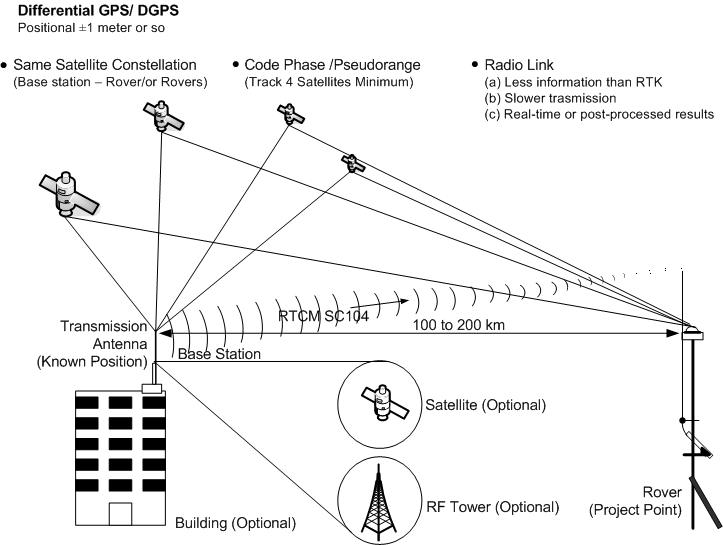
Two or more GPS receive signals from the same set of
satellites simultaneously. One GPS unit, known as the reference
or base station, is always positioned on a known point.
The observations are processed with respect to the base station
to obtain the position of other station known as the rover
station. Figure 8.4 shows a typical arrangement
for differential positioning.
By using this method, the accuracy achieved is much higher
than that in point positioning because errors common to both
receivers get cancelled.
These methods are broadly grouped as follows:
Static positioning
All receivers remain stationary and collect carrier phase over a period of time.
Kinematic positioning
One receiver remains stationary at reference station while other rovers move from one point to another