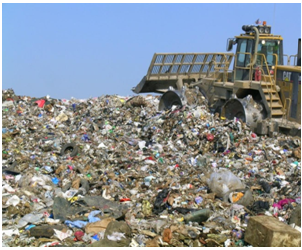
Closing and final use of landfills
- Municipal landfills must be closed according to state and federal regulations. Such closure includes the permanent control of leachate and gas and the placement of an impermeable cap.
- The cost of closure is very high and must be incorporated in the tipping fee during the life of the landfill.
- Landfills settle unevenly, and it is generally suggested that nothing at all be constructed on a landfill for at least two years after closure, and that no large permanent structures ever be built.
- Disturbance may cause structural problems, and trapped gases can present a hazard.
- Buildings constructed on landfills should have spread footings (large concrete slabs) as foundations, although some have been constructed on pilings that extend through the fill onto rock.
Solid Waste Management(Hazardous Waste)
What is Solid Waste?
- Municipal solid waste (MSW), commonly known as trash or garbage (US), refuse or rubbish (UK) is a waste type consisting of everyday items that are discarded by the public.
Typical classification :
- Biodegradable waste: food and kitchen waste, green waste, paper (can also be recycled).
- Recyclable material: paper, glass, bottles, cans, metals, certain plastics, fabrics, clothes, batteries etc.
- Inert waste: construction and demolition waste, dirt, rocks, debris.
- Electrical and electronic waste (WEEE) - electrical appliances, TVs, computers, screens, etc.
- Composite wastes: waste clothing, Tetra Packs, waste plastics such as toys.
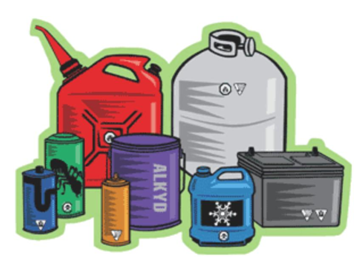
- Hazardous waste including most paints, chemicals, light bulbs, fluorescent tubes, spray cans, fertilizer and containers, Toxic waste including pesticide, herbicides, fungicides, medical waste.