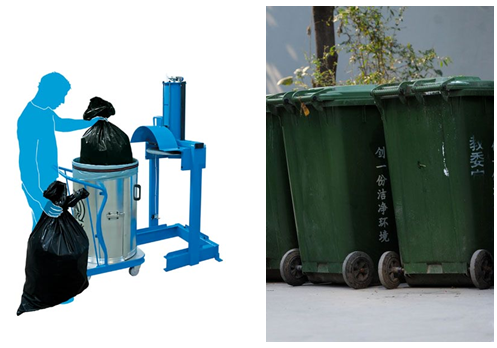
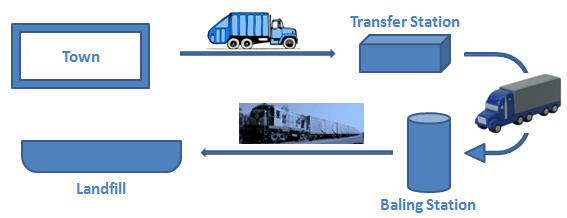
Transfer station:
- A typical system includes several stations, located at various points in a city, to which collection trucks bring the refuse.
- The drive to each transfer station is relatively short. This is to increase collection efficiency.
- At the transfer station, bulldozers pack the refuse into large containers that are trucked to the landfill or other disposal facility.
- Alternatively, the refuse may be baled before disposal.
Effects on Health
- Disease vectors are the means by which disease organisms are transmitted, such as water, air, and food. The two most important disease vectors related to solid waste are rats and flies.
- 70,000 flies can be produced in one cubic feet of garbage, and they carry many diseases like bacillary dysentery.
- Rats not only destroy property and infect by direct bite, but also carry insects like fleas and ticks that may also act as vectors.
- Infiltration of leachate from MSW disposal into groundwater, particularly drinking water supplies is a public health issue.
- Leachate may be a major groundwater and surface water contaminant, particularly where there is heavy rainfall and rapid percolation through the soil.