Naphtha reforming
The naphtha is a 70-2000C petroleum cut containing C5-C10 hydrocarbons. Naphtha feed mainly consist of alkanes and naphthenes or cyclo-alkanes with very low amount of aromatics. Naphtha reforming involves conversion of normal alkanes and cycloalkanes to branched alkanes and aromatics to produce high octane gasoline and aromatic source for chemical production. The main reactions are dehydrogenation, isomerization and dehydro cyclization. The dehydrocyclization of alkanes needs to be maximized for increase in aromatic production but it is also the most difficult reaction to be accomplished. Typical examples of catalytic hydrocarbon reforming reactions are as follows
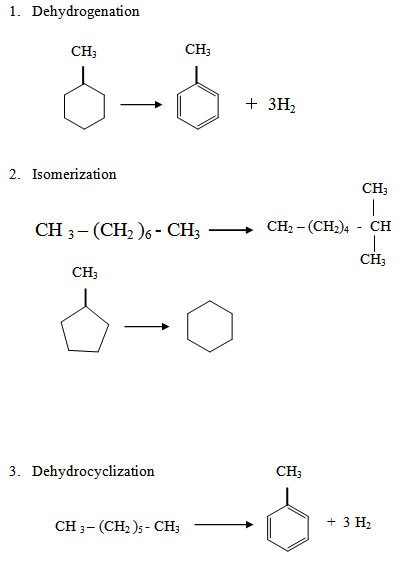
The hydrocracking reactions may also take place. The hydrocracking reactions are usually undesirable as it result in conversion of useful molecules to low molecular weight gasses with consumption of significant amount of hydrogen.
