Resolution: The ability of a chromatography column to separate two analyte peak from another is known as resolution. It is defined as the ratio of difference in retention time between two peaks and average of base of peak width. It is given by
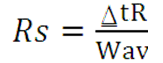
When Rs=1, the separation of two peaks is 97.7% and a column with Rs more than 1.5 considered good. The number of distribution events govern the ability of a column to separate the two analytes. In another words, resolution is directly proportional to the number of distribution events. In column chromatography, each thin plain of column matrix participate in distribution of molecule. Assume height of a distribution plain is H and length of a column is L, hence number (N) of distribution plain in a column is given by,
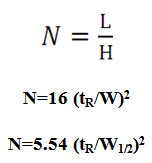
Hence, Number of distribution plain in a column is controlling two parameters:
(1) As number of distribution plain will go up, it will allow the analyte to travel for longer period of time, consequently it will increase the distance between two peaks.
(2) As number of distribution plain will go up, it will reduce the width of the base of peak, as a result the peaks will be more sharp. A representative example, how number of distribution plain affects the base of the peak is given in Figure 28.5. As the number is increasing, the peak width is decreasing. Hence, number of distribution is an indirect way to measure the column efficiency, higher N number is desirable for better separation.