1. Introduction
In somatic embryogenesis (SE), embryo-like structures analogous to zygotic embryo are formed either directly from the tissue or via an intervening callus phase. The process is opposite of zygotic or sexual embryogenesis. The fertilization process prompts the egg cell (called zygote after fertilization) to divide and develop into an embryo (the process is called embryogenesis). However, fertilization is not always essential to stimulate the egg to undergo embryogenesis. As happens in parthenogenesis, the pollen stimulus alone, or simply the application of some growth regulators may induce the egg to undergo embryogenic development. Moreover, it is not the monopoly of the egg to form an embryo. Any cells of female gametophyte (embryo sac) or even that of the sporophytic tissue around the embryo sac may give rise to an embryo (Figure 8.1). The development of adventives embryos from nucellar cells is a very common feature in case of Citrus and Mangifera. However, the nucellar embryos attain maturity only if they are pushed into the embryo sac at an early stage of development or else they may fail to mature. These in vivo observations would suggest that for their growth and development embryos require a special physical and chemical environment available only inside the embryo sac. The first observations of in vitro somatic embryogenesis were made in Daucus carota and in other species like, Citrus species, Medicago species, Ranunculus sceleratus, etc.
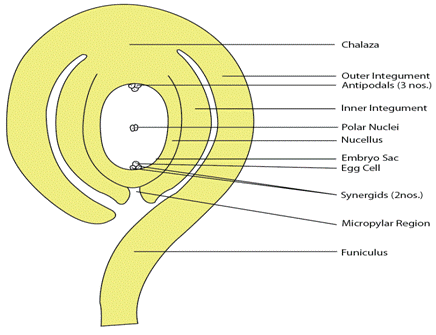
Figure 8.1 : Longitudinal section of an ovule