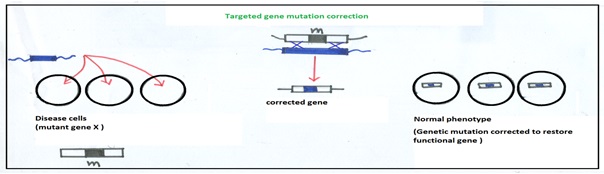
Figure 8-1.3.5: This is used for disease caused by mutation. The corrected gene will be swapped by the mutant gene X(m). Then diseased cells will become normal after the correction of mutation by gene therapy.
(Source: http://www.ncbi.nlm.nih.gov/books/NBK7569/figure/A2871/?report=objectonly)
8-1.4 Gene Therapy Approaches
8-1.4 .1 Classical Gene Therapy
It involves therapeutic gene delivery and their optimum expression once inside the target cell. The foreign genes carry out following functions.
- Produce a product (protein) that the patient lacks;
- Produces toxin so that diseased cell is killed.
- Activate cells of the immune system so as to help in killing of diseased cells.
8-1.4 .2 Non-classical gene therapy
It involves the inhibition of expression of genes associated with the pathogenesis, or to correct a genetic defect and restore the normal gene expression.
8-1.5 Methods of gene therapy
There are mainly two approaches for the transfer of genes in gene therapy:
1. Transfer of genes into patient cells outside the body (ex vivo gene therapy)
2. Transfer of genes directly to cells inside the body (in vivo).