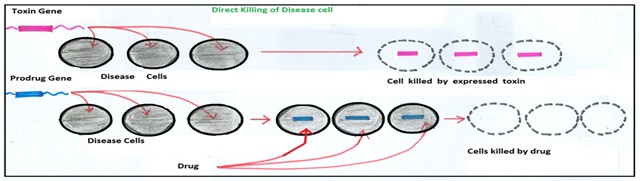
Figure 8-1.3.2: a) Direct killing of diseased cells by two methods. The first method is the introduction of toxin gene into the diseased cell which when expresses toxin protein the cells die. The second method involves incorporation of a certain gene (e.g. TK) in the gene therapy vector which shows a suicidal property on introducing certain drug (e.g. ganciclovir).
Thymidine kinase (TK) phosphorylates the introduced prodrug ganciclovir which is further phosphorylated by endokinases to form ganciclovir triphosphate, an competitive inhibitor of deoxyguanosine triphosphate. Ganciclovir triphosphate causes chain termination when incorporated into DNA.
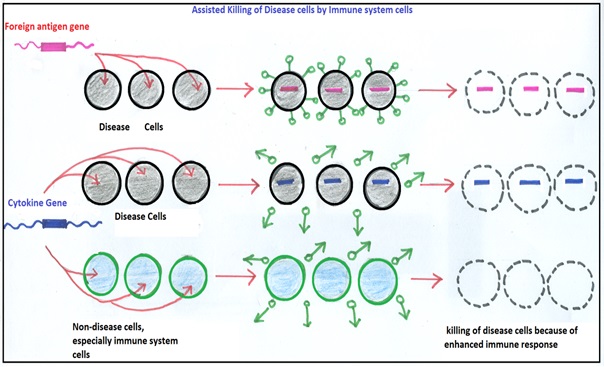
Figure 8-1.3.2: b) Assisted killing is another strategy of killing diseased cells. Here one method is to insert a well known foreign antigen coding gene which induces immune cells for the killing of the diseased cells. Few more methods are based on immune cells activation in which a certain cytokine encoding gene incorporated into gene therapy vector and inserted into either diseased cells or non-diseased cells. This will lead to enhanced immune response followed by killing of diseased cells.