8-1.2 .1 Somatic Gene Therapy
In somatic gene therapy, the somatic cells of a patient are targeted for foreign gene transfer. In this case the effects caused by the foreign gene is restricted to the individual patient only, and not inherited by the patient's offspring or later generations.
8-1.2 .1 Germ Line Gene Therapy
Here, the functional genes, which are to be integrated into the genomes, are inserted in the germ cells, i.e., sperm or eggs. Targeting of germ cells makes the therapy heritable.
8-1.3 Gene Therapy Strategies
8-1.3.1 Gene Augmentation Therapy (GAT)
In GAT, simple addition of functional alleles is used to treat inherited disorders caused by genetic deficiency of a gene product, e.g. GAT has been applied to autosomal recessive disorders. Dominantly inherited disorders are much less amenable to GAT. Figure 8-1.3.1 shows the GAT strategy
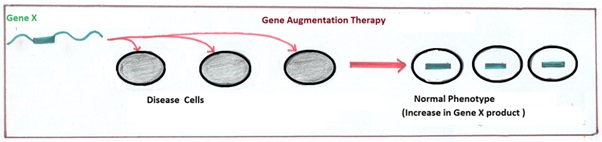
Figure 8-1.3.1: A gene therapy vector has been designed to treat the diseased cells with a gene X. This vector was introduced inside the diseased cells by various gene transfer methods. After a successful homologous recombination the treated cells will show the presence of gene X product as well as normal phenotype.
8-1.3.2 Targeted Killing of Specific Cells
It involves utilizing genes encoding toxic compounds (suicide genes), or prodrugs (reagents which confer sensitivity to subsequent treatment with a drug) to kill the transfected/ transformed cells. This general approach is popular in cancer gene therapies. This is shown in figure 8-1.3.2a & 8-1.3.2b