Cell adhesion to the ECM: Many cells bind to components of the extracellular matrix. Cell adhesion can occur in two ways by focal adhesions, connecting the ECM to actin filaments of the cell, and hemi-desmosomes, connecting the ECM to intermediate filaments such as keratin. This cell-to-ECM adhesion is regulated by specific cell surface cellular adhesion molecules (CAM) known as integrins. The integrins are a family of transmembrane proteins consisting of two subunits, designated α and β . Integrins are cell surface proteins that bind cells to ECM structures such as fibronectin and laminin, and also to integrin proteins on the surface of other cells.
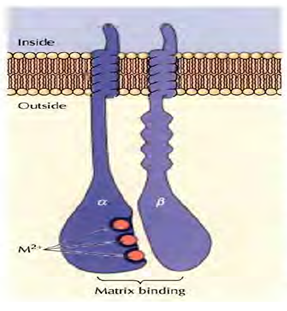
Figure 6: Structure of Integrin
Fibronectins bind to ECM macromolecules and facilitate their binding to transmembrane integrins. The attachment of fibronectin to the extracellular domain initiates intracellular signaling pathways as well as association with the cellular cytoskeleton via a set of adaptor molecules such as actin.
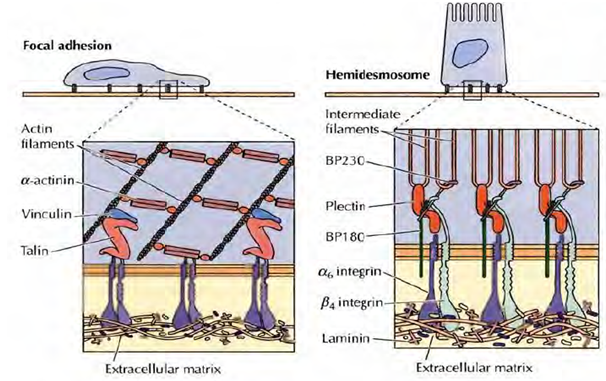
Figure 7: Focal adhesion and Hemidesmosome