Proteoglycans: Since we know that, GAGs are carbohydrate polymers and are usually attached to extracellular matrix proteins to form proteoglycans (exception-hyaluronic acid). Proteoglycans have a net negative charge that attracts positively charged sodium ions (Na+) which attracts water molecules via osmosis, keeping the ECM and resident cells hydrated. Proteoglycans may also help to trap and store growth factors within the ECM. There are the different types of proteoglycan found within the extracellular matrix.
- Heparin sulphate: Heparin sulphate (HS) is a linear polysaccharide found in all animal tissues. It occurs as a proteoglycan (PG) in which two or three HS chains are attached in close proximity to cell surface or extracellular matrix proteins. HS binds to a variety of protein ligands and involve in regulation of a wide variety of biological activities, including developmental processes, angiogenesis, blood coagulation and tumour metastasis. In the extracellular matrix, particularly basement membranes, the multi-domain proteins perlecan, agrin and collagen XVIII are the main proteins to which heparin sulphate is attached.
- Chondroitin sulphate: Chondroitin sulfates help to provide the tensile strength of cartilage, tendons, ligaments and walls of the aorta. They have also been known to affect neuroplasticity.
- Keratan sulphate: Keratan sulfates have variable sulfate content and unlike many other GAGs, do not contain uronic acid. They are present in the cornea, cartilage, bones and the horns of animals.
Non-proteoglycan polysaccharide: There are various non-proteoglycan polysaccharides.
1. Hyaluronic acid: Hyaluronic acid (or hyaluronan at physiological pH) is a polysaccharide containing alternating residues of D-glucuronic acid and N -acetyl glucosamine. Unlike other glycosaminoglycan (GAGs) it is not found as a proteoglycan. Like cellulose and chitin, it is synthesized at the plasma membrane by a transmembrane hyaluronan synthase. Hyaluronan is the only GAG that occurs as a single long polysaccharide chain. Hyaluronate is also an essential component of the extracellular matrix of cartilage and tendons, to which it contributes tensile strength and elasticity as a result of its strong interactions with other components of the matrix. A number of proteoglycans interact with hyaluronan to form large complexes in the extracellular matrix. A well-characterized example is aggrecan, the major proteoglycan of cartilage. Hyaluronic acid acts as an environmental sign that regulates cell behaviour during embryonic development, healing processes, inflammation and tumour development. It interacts with a specific trans-membrane receptor, CD44.
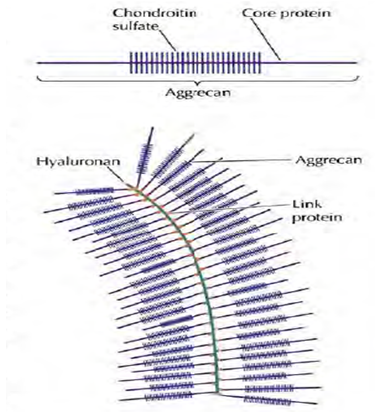
Figure 2: Structure of hyaluronan and aggrecan
2. Matrix Structural Proteins: Extracellular matrices are composed of tough fibrous proteins embedded in a gel-like polysaccharide ground substance-a design basically similar to that of plant cell walls.