5. In bacteria: In bacteria, cAMP plays a crucial role and its level varies depending on the medium used for growth. In E.coli , cAMP involves in the positive regulation of the lac-operon. cAMP is synthesized from ATP by adenylyl cyclase, as a result increase in the level of cAMP causes decrease in glucose concentration which is the carbon source. cAMP then binds to the transcriptional regulatory protein, cAMP receptor protein (CRP) also called catabolic activator protein(CAP). After binding of cAMP to CAP enhance the binding capacity of CAP to its binding site (CAP binding site) on target DNA sequence which in lac operon located 60 nucleotides upstream of transcription start site, making it easier for RNA polymerase to bind to the adjacent promoter to start transcription of the lac-operon, increasing the rate of lac-operon transcription. With a high glucose concentration, the cAMP concentration decreases, and the CRP disengages from the lac-operon.
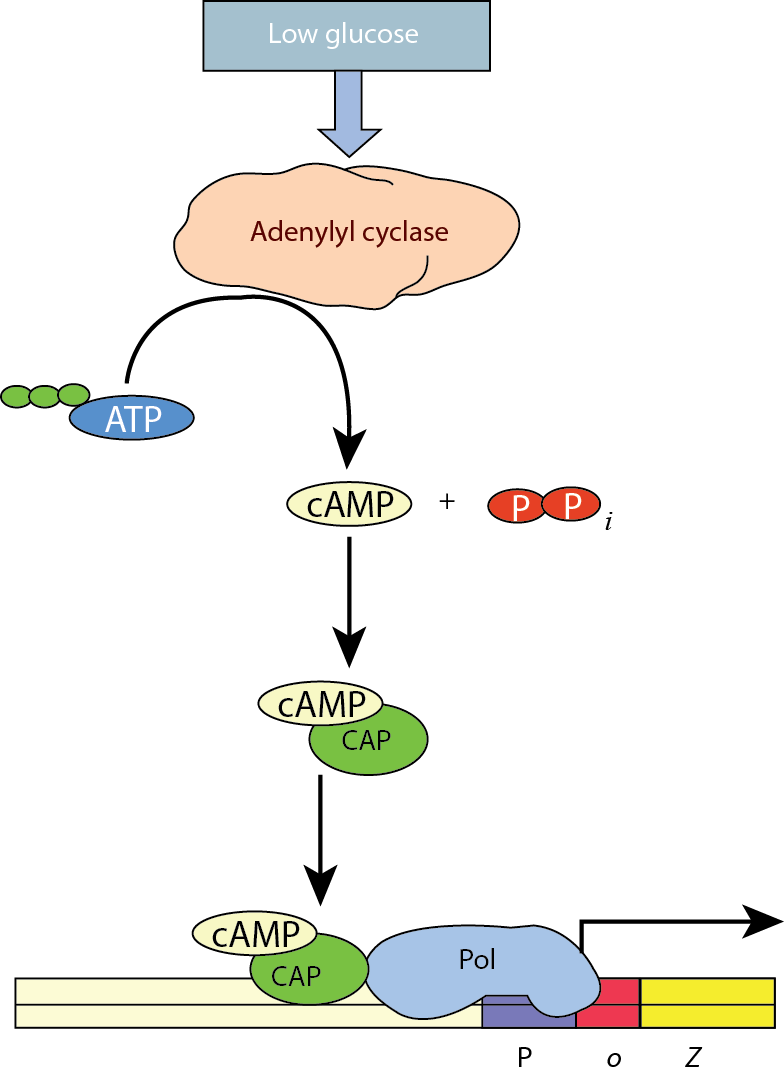
Figure 4: Positive regulation of lac operon by glucose repression coupled to enhance level of cAMP.
6. In some slime moulds: In some slime mold species such as Dictyostelium discoideum , the chemotactic movement of cells is organized by periodic waves of cAMP that propagates through the cell. The waves are the result of a regulated production and secretion of extracellular cAMP and a spontaneous biological oscillator that initiates the waves at centers of territories.
7. Mitochondrial Biogenesis: cAMP/PKA has key role in mitochondrial compartment biogenesis. Mitochondria takes part in several vital cellular functions. For example they are involved in ATP production, via the process of oxidative phosphorylation, the ATP production via mitrochondria is 15 times more than glycolysis alone. They also take central part in metabolic regulation and assist diverse cell signalling events. Mitochondria are therefore essential for the maintenance, adaptability and survival of eukaryotic cells. cAMP/PKA signaling balances respiratory activity with mitochondria dependent apoptosis via transcriptional regulation.