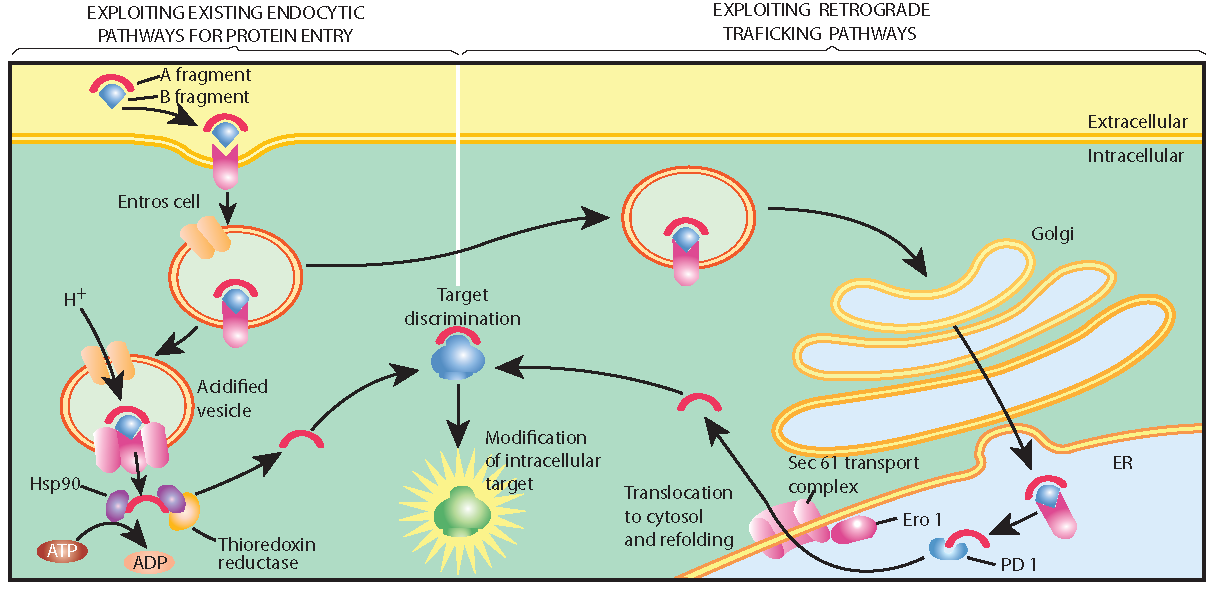
Figure 5: Entry of AB toxins into target cells. Some toxins use host endocytic pathways that cells use for degrading exogenous proteins within lysosomes.
Entry of toxin with influx of Ca2+:
In the absence of Ca2+, cells were not sensitive to the toxic proteins like abrin and modeccin and also the sensitivity to ricin and diphtheria toxin was reduced. Calcium deprivation leads to negative effect on the binding and endocytosis of these toxins. Some studies indicate that Ca2+ is involved in the entry mechanism for abrin, modeccin, and ricin, possibly as a Ca2+ flux together with the toxin.
The plant toxins abrin, modeccin, and ricin consist of two polypeptide chains connected by a disulfide bond. B-chain binds the toxins to cell surface receptors while A-chain enters the cell and inhibits protein synthesis.
Diphtheria toxin is synthesized as one polypeptide chain which is cleaved by proteolytic enzymes into an A- and a B-fragment. “A fragment” possesses enzymatic activity and inactivates components of the protein-synthesizing machinery. Recently it was shown that low pH is required for entry of diphtheria toxin into the cytosol before transport of the A-fragment across the membrane. The low pH induces exposure of a hydrophobic domain in the B fragment that forms ion permeable channels across the membrane and interacts with the membrane lipids and hence facilitates entry of the A-fragment (Sandvig et al., 1982).
Interesting facts:
- “A” denotes to the active protein and “B” dentotes to the binding protein in AB toxin.
- Some toxins like diphtheria, anthrax and the botulinum neurotoxins, exploit the drop in pH for its entry as endocytic vesicles are trafficked from the plasma membrane into the cell.
- Some toxins like cholera toxin, shiga toxin, and Pseudomonas aeruginosa exotoxin A exploit the sec61 retro-translocon in the endoplasmic reticulum for its entry.
- Calcium deprivation leads to negative effect on the binding and endocytosis of these abrin, modeccin, ricin and diphtheria toxin. The entry mechanism for these toxins depends on Ca2+ flux together with the toxin.