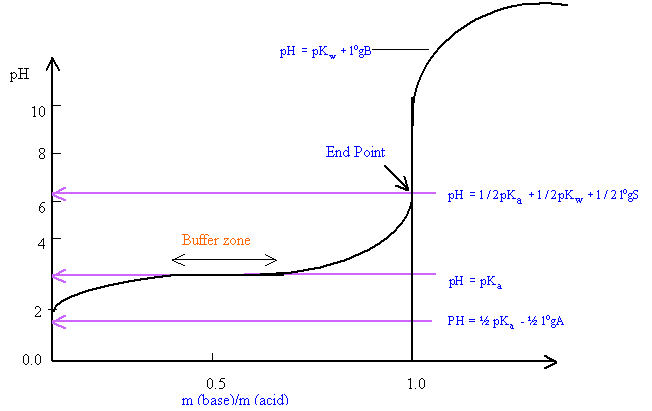
This equation reduces to simpler forms when a) no base is added, b) near the end point of the titration and c) when excess base is added beyond the end point.
a) pH = ½ pKa – ½ log [A]
b) pH = ½ pKa + ½ pKw+ ½ log [S]
c) pH = pKw + log [B]
When the pH hardly changes when the base is added (a region before reaching the end point) the solution is referred to as the buffer solution. In this buffer zone, pH = pKa. The full titration curve for the titration of a weak acid against a strong base is shown in the following figure (24.3). You can see that pKa can be readily determined from the graph.
24.3 Titration curve for the titration of a weak acid against a strong base i.