2.4 Proportional-Integral-Derivative (PID) controller
Three term pneumatic control can be achieved using a P-I-D controller. Here the action of the feedback bellows is delayed. The output is given by,
|
(6.5.3) |

The terms gain K, derivative time Td, integral time Ti which can be set by beam pivot point and two bleed valves (Fig. 6.5.9). This is a combination of all the three controllers described above. Hence it combines the advantages of all three. A derivative control valve is added to delay the response at feedback bellow. Addition of derivative term makes the control system to change the control output quickly when SP and PV are changing quickly. This makes the system more stable.
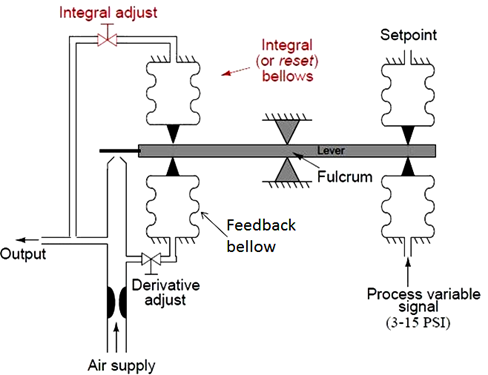
Fig. 6.5.9 Proportional-Integral-Derivative (P-I-D) controller
Advantages of pneumatic controllers
- Simplicity of the components and no complex structure
- Easy maintainability
- Safe and can be used in hazardous atmospheres
- Low cost of installation
- Good reliability and reproducibility
- Speed of response is relatively slow but steady
- Limited power capacity for large mass transfer
Limitations of pneumatic controllers
- Slow response
- Difficult to operate in sub-normal temperatures
- Pipe-couplings can give rise to leaks in certain ambient conditions
- Moving parts - more maintenance