In reference to race and inequality in virtual reality let us look at an essay by Mark Poster entitled “Postmodern Virtualities” (1995). Here we understand how cyberculture scholars have been working on the interface between virtuality, postmodernism and posthumanism in relation to issues of inequality among nations.
“The political implications of the Internet for the fate of the nation-state and the development of a global community also requires attention. The dominant use of English on the Internet suggests the extension of American power as does the fact that e-mail addresses in the US alone do not require a country code. The Internet normalizes American users. But the issue is more complex. In Singapore, English serves to enable conversations between hostile ethnic groups, being a neutral “other”. Of course, vast inequalities of use exist, changing the democratic structure of the Internet into an occasion for further wrongs to the poorer populations.”
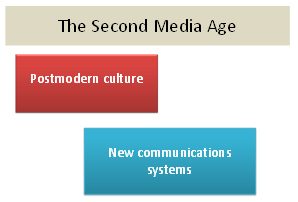
Cyber culture is also called the second media age because it is radically different from the old media in certain configurations, particularly in distribution and exhibition. If the first media age was the outcome of modernism, this new media age of electronic environments and of the network society is a result of postmodern cultures. It is characterized by two things: a postmodern cultural way of life and the new communication systems.