In this lecture we would discuss Lyapunov stability theorem and derive the Lyapunov Matrix Equation for discrete time systems.
1 Revisiting the basics
Linearization of A Nonlinear System Consider a system

where functions  are continuously differentiable. The equilibrium point
  for this system is defined as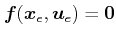
. What is linearization?
Linearization is the process of replacing the nonlinear system model by its linear counterpart in a small region about its equilibrium point.
. Why do we need it?
We have well stabilised tools to analyze and stabilize linear systems.
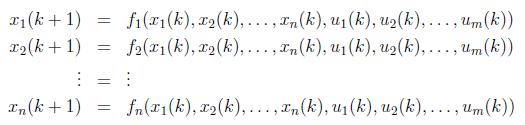
The method: Let us write the general form of nonlinear system  as:
as:
Let ![$ \boldsymbol{u}_e=[u_{1e}\;\;\;u_{2e}\;\;\;\ldots\;\;\;u_{me}]^T$](images/img14.png) be a constant input that forces the system to settle into a constant equilibrium state
be a constant input that forces the system to settle into a constant equilibrium state ![$ \boldsymbol{x}_e=[x_{1e}\;\;\;x_{2e}\;\;\;\ldots\;\;\;x_{ne}]^T$](images/img15.png) such that
such that 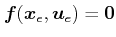 holds true.
We now perturb the equilibrium state by allowing: 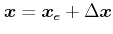 and
and 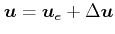 . Taylor's expansion yields
 |
where
 |
are the Jacobian matrices of f with respect to x and u, evaluated at the equilibrium point, ![$ [\boldsymbol{x}_e^T\quad \boldsymbol{u}_e^T]^T$](images/img24.png) .
.