Since the velocity error constant criterion will produce the same
controller dcgain  , the gain of the lag-lead compensator is
designed to be
, the gain of the lag-lead compensator is
designed to be  .
.
The Bode plot of the uncompensated system with  is
shown in Figure 5.
is
shown in Figure 5.
![\includegraphics[width=4.5in]{m5l8fig5.eps}](images/img50.png)
From Figure 5, it is seen that at  rad/sec the phase
angle of the system is
rad/sec the phase
angle of the system is
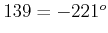 .
.
Thus a huge phase lead ( ) is required if we want to acieve a PM
of
) is required if we want to acieve a PM
of  which is not possible with a single lead compensator. Let us
lower the PM requirement to a minimum of
which is not possible with a single lead compensator. Let us
lower the PM requirement to a minimum of  at
at
 rad/sec.
Since the new  should be rad/sec, the required
additional phase at , to maintain the specified PM, is
should be rad/sec, the required
additional phase at , to maintain the specified PM, is
 . With safety margin
  ,
,
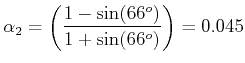
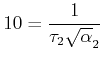
 . However, introducing this compensator will
actually increase the gain crossover frequency where the phase
characteristic will be different than the designed one. This can be
seen from Figure 6.
. However, introducing this compensator will
actually increase the gain crossover frequency where the phase
characteristic will be different than the designed one. This can be
seen from Figure 6.
![\includegraphics[width=4.5in]{m5l8fig6.eps}](images/img59.png)
Also, as seen from Figure 6, the GM of the system is
negative. Thus we need a lag compensator to lower the magnitude at
rad/sec.