Questions and Answers
1. What is the total number of all possible (i) passive NPSFs and (ii) active NPSF in type-1 and type-2 neighborhood?
Answer:
• Passive NPSF:
As we know there are three types of passive NPSF as:  . In case of type-1 neighborhood, as there are 4 neighborhood cells there can be 24 pattern combinations. So number of passive NPSFs can be 3x 24. In case of type-2 neighborhood, there are 7 neighborhood cells thereby making the number of passive NPSFs to be 3x 27.
• Active NPSF
In active NPSF ( 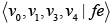 ) there are two types of faults as: vcut=1, ƒe=0 and vcut = 0, ƒe=1. Each neighborhood cell can have four combinations:
  . In type-1 neighborhood there are 4 neighborhood cells and each can have 4 combinations, so there can be 4 4pattern combinations. So number of passive NPSFs can be 2x 4 4.
In case of type-2 neighborhood, there are 7 neighborhood cells thereby making the number of active NPSFs to be 2x 4 7.
2. From answer 1 it is clear that testing type-1 neighborhood is more complex than type-2 neighborhood. What assumption regarding fault model is made when type-1 neighborhood is adopted instead of type-2 neighborhood.
Answer:
Type-1 neighborhood assumes either that diagonal cell couplings are not prominent or that if there is a diagonal cell coupling, then the fault will also cause a vertical or horizontal cell coupling. Type-2 neighborhood is needed when diagonal couplings are significant, and do not necessarily cause a vertical/horizontal coupling.