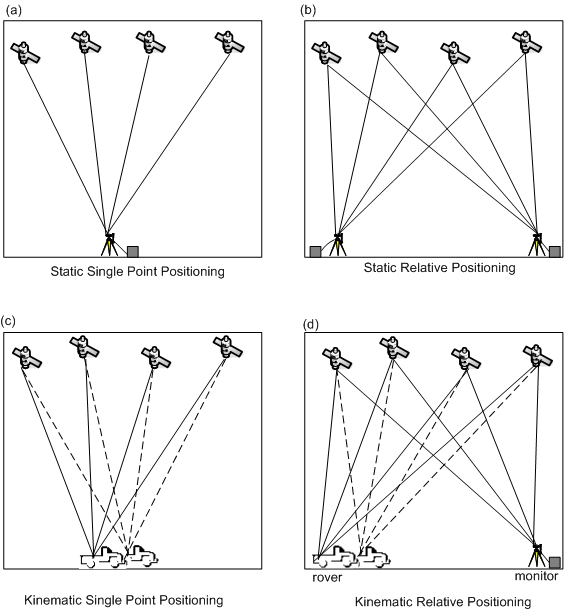
Static positioning : A GPS receiver is required to be stationary while collecting GPS data.
Kinematic
positioning : One receiver, referred to as a
monitor or base, is left stationary on a known point
while a second receiver, referred to as a rover, is
moved over the path to be positioned.
Figure
12.3 Static vs Kinematic positioning (GPS Positioning Guide,
1995)
Real time versus Post mission
positioing
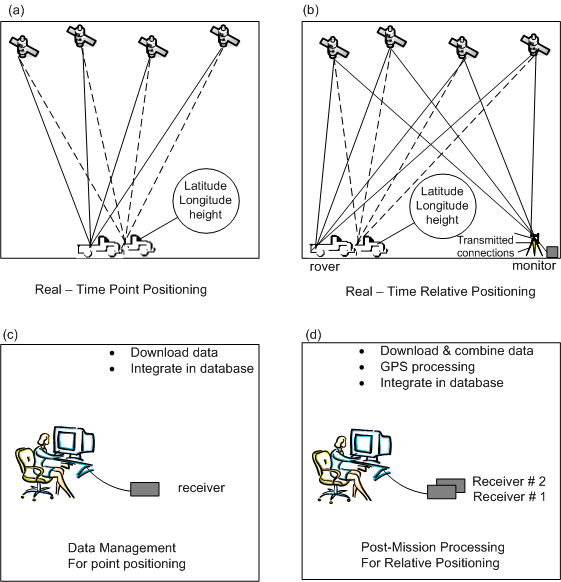
Real-time processing: Positions are computed almost instantaneously,
on site. No post processing is required
and positioing
results are instantly available. There are two modes for
such positiong - real Time Code RT-DGPS (Code based) and
Real Time Phase RTK (Phase based).
Post-mission processing: GPS data is combined and reduced
after all data collection has been completed.
Real-time relative positioning: Needs a data link to transmit corrections from a monitor receiver at a known point to a rover receiver at an unknown point.
Post-mission processing for relative positioning: Needs post-processing of combination of data from all receivers after an observation period.
Even with real-time point positioning, for many GPS applications it is still necessary to download data and enter it in a database specific to the user's application.
Figure
12.4 Real time and post-mission processing (GPS Positioning
Guide, 1995)