Single Point (or Point) versus Relative positioning
Static versus Kinematic
positioning
Real time versus Post mission (post-processing based)
positioning
Single
Point versus Relative Positioning
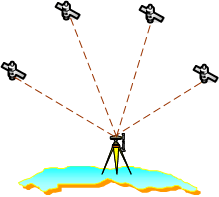
(a) Single Point Positioning
Code measurements (explained later) are used to compute
receiver position directly where coordinates of a receiver
at an unknown point are sought with respect to the earth's
reference frame by using the known positions of the GPS
satellites being tracked (Figure 12.1).
It is also referred to as absolute positioning , and
often just as point positioning.
Figure
12.1 Point positioning in GPS
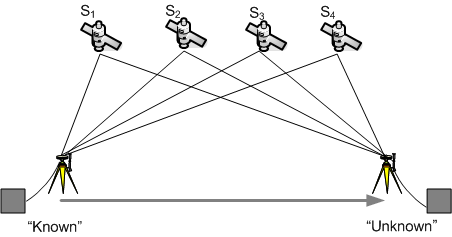
(b) Relative Positioning
Coordinates of a receiver at an unknown point are sought
with respect to a receiver at a known point using code
and/or carrier measurements (Figure 12.2).
The baseline or baseline vector (dx, dy, dz) is computed from a point of known position to a point of unknown position.
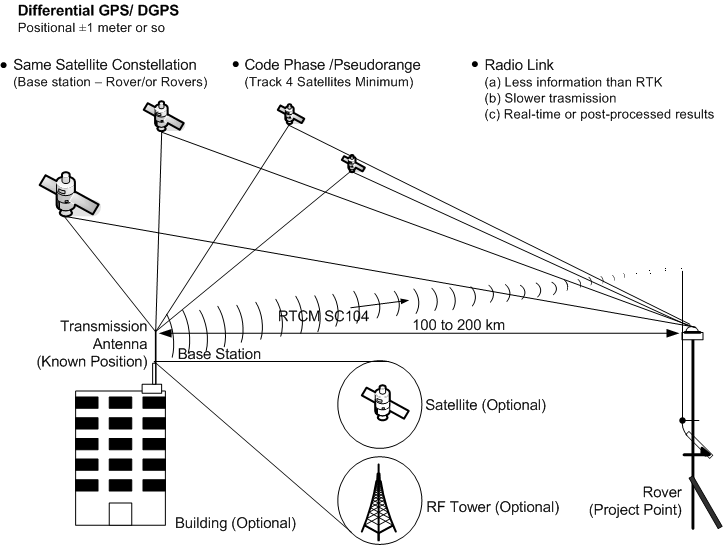
The term differential positioning is sometimes used interchangeably with relative positioning which is more often associated with a specific type of relative positioning which applies corrections measured at a known site to measurements at an unknown site.