|
Kerbs indicate the boundary between the carriage way and the shoulder or
islands or footpaths.
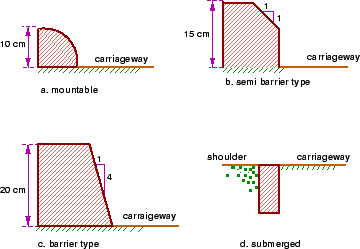
Different types of kerbs are (Figure 1):
- Low or mountable kerbs :
This type of kerbs are provided such that they encourage the traffic to remain
in the through traffic lanes and also allow the driver to enter the shoulder
area with little difficulty.
The height of this kerb is about 10 cm above the pavement edge with a slope
which allows the vehicle to climb easily.
This is usually provided at medians and channelization schemes and also helps
in longitudinal drainage.
- Semi-barrier type kerbs :
When the pedestrian traffic is high, these kerbs are provided.
Their height is 15 cm above the pavement edge.
This type of kerb prevents encroachment of parking vehicles, but at acute
emergency it is possible to drive over this kerb with some difficulty.
- Barrier type kerbs : They are designed to discourage vehicles from
leaving the pavement.
They are provided when there is considerable amount of pedestrian traffic.
They are placed at a height of 20 cm above the pavement edge with a steep
batter.
- Submerged kerbs : They are used in rural roads.
The kerbs are provided at pavement edges between the pavement edge and
shoulders.
They provide lateral confinement and stability to the pavement.
Figure 1:
Different types of kerbs
 |
|
|

